












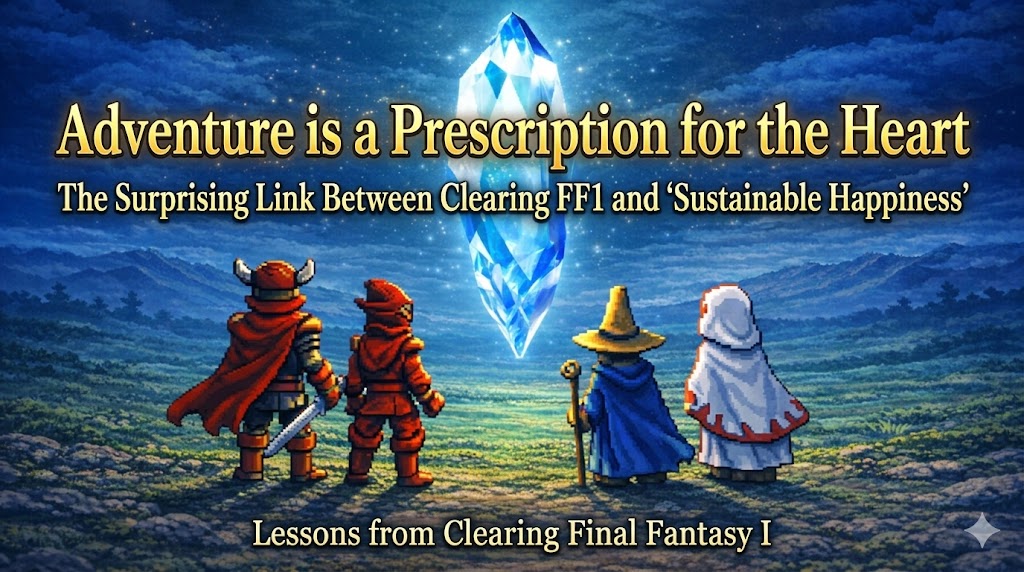
Adventure is a Prescription for the Heart: The Surprising Link Between Clearing FF1 and “Sustainable Happiness”
“Video games are a waste of time.”
There was a time when people said such things.
However, in the world of modern psychology—especially positive psychology—this common sense is being overturned.
Scientific Evidence that Games Increase Happiness
Based on multiple recent studies, such as those from the University of Oxford, it has been concluded that gaming has the most positive impact on happiness when played for “about one hour a day” or if “the quality is high (the player is enjoying it).”
1. The “One Hour a Day” Golden Ratio
Research by Dr. Andrew Przybylski of the University of Oxford (studying about 5,000 young people) found that those who play for less than one hour a day have higher levels of happiness and life satisfaction than those who don’t play at all.
Conversely, playing for more than three hours a day may decrease satisfaction and increase risks like restlessness.
In short, “moderate time (around one hour a day)” works best as a spice for life.
2. Quality (Motivation) is More Important Than Time
Recent research shows that “why you play” affects happiness more than “how many hours you play.”
-
Autonomous Play (Playing because you want to): Happiness remains high or increases, even with longer play.
-
Compulsive Play (Playing because you feel forced or can’t stop): Happiness decreases even with short play sessions.
3. Backed by Recent Japanese Research
Studies published in 2024 by Nihon University and Osaka University confirmed that owning and playing consoles like the Nintendo Switch or PS5 can improve mental health and life satisfaction.
However, the trend shows that positive effects begin to fade after more than three hours of play.
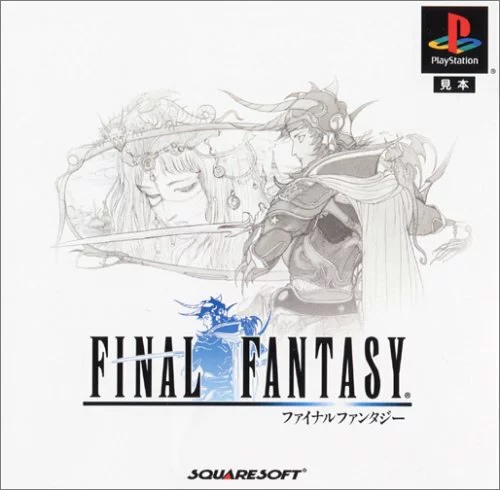
Through my experience clearing the masterpiece Final Fantasy 1 (PS1 version), I will explore how games can enrich our mindset.
(By the way, I only played for at most one hour a week, so it took me six months to finish! Lol)
The Pleasure of “Steady Effort”: Cultivating Competence
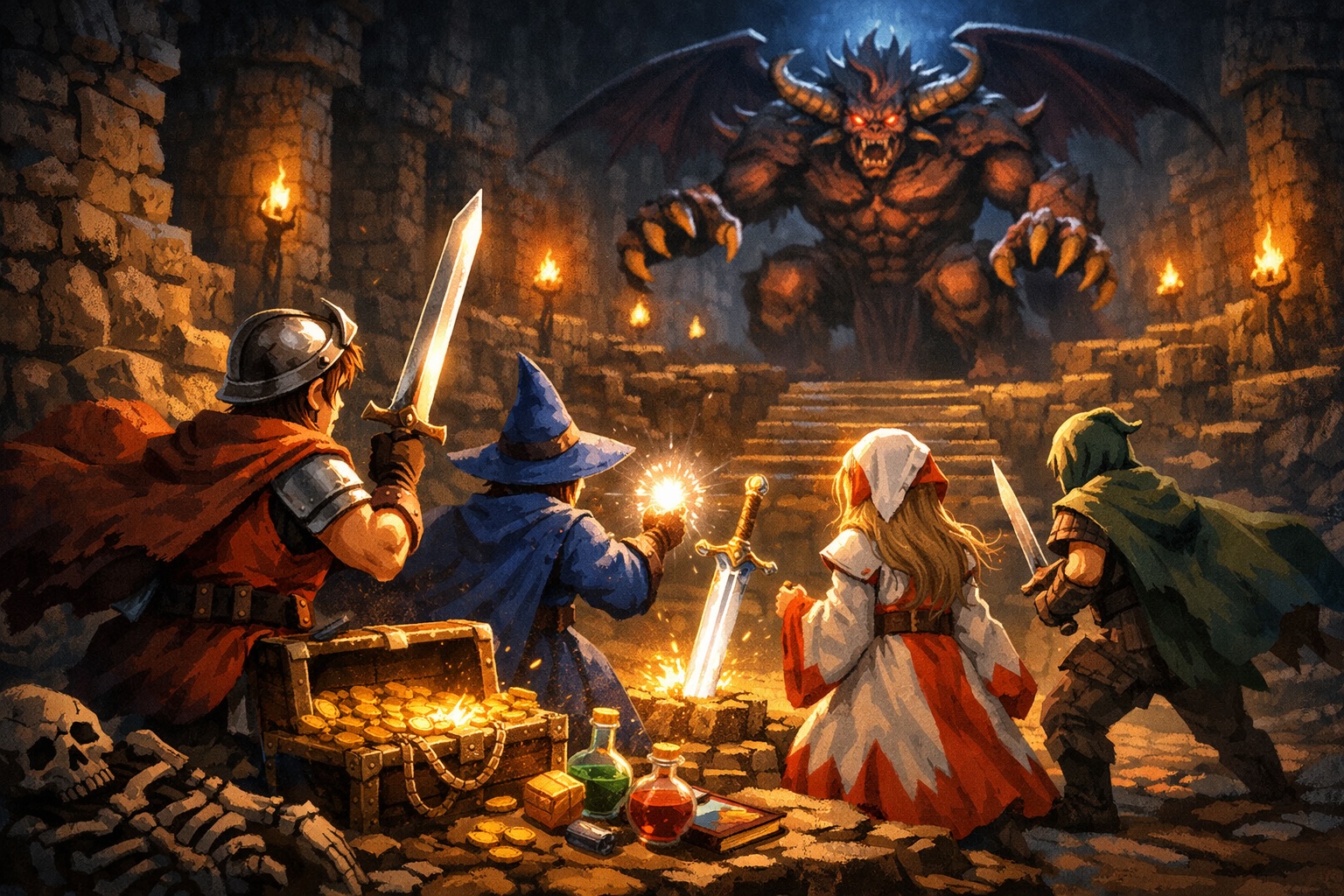
The PS1 version of Final Fantasy 1 is not an easy journey compared to the overly kind games of today.
It requires careful level-grinding and dungeon exploration with limited resources.
However, this “steady preparation” is what matters.
In the PERMA model of positive psychology, “Accomplishment” is not just about the result; it includes self-investment in the process.
The joy of defeating a boss with a spell you struggled to learn or a weapon you finally bought serves as a simulation for cultivating “Self-Efficacy” (the power to overcome difficulties) in real life.
The Flow Experience: The Power of Immersion
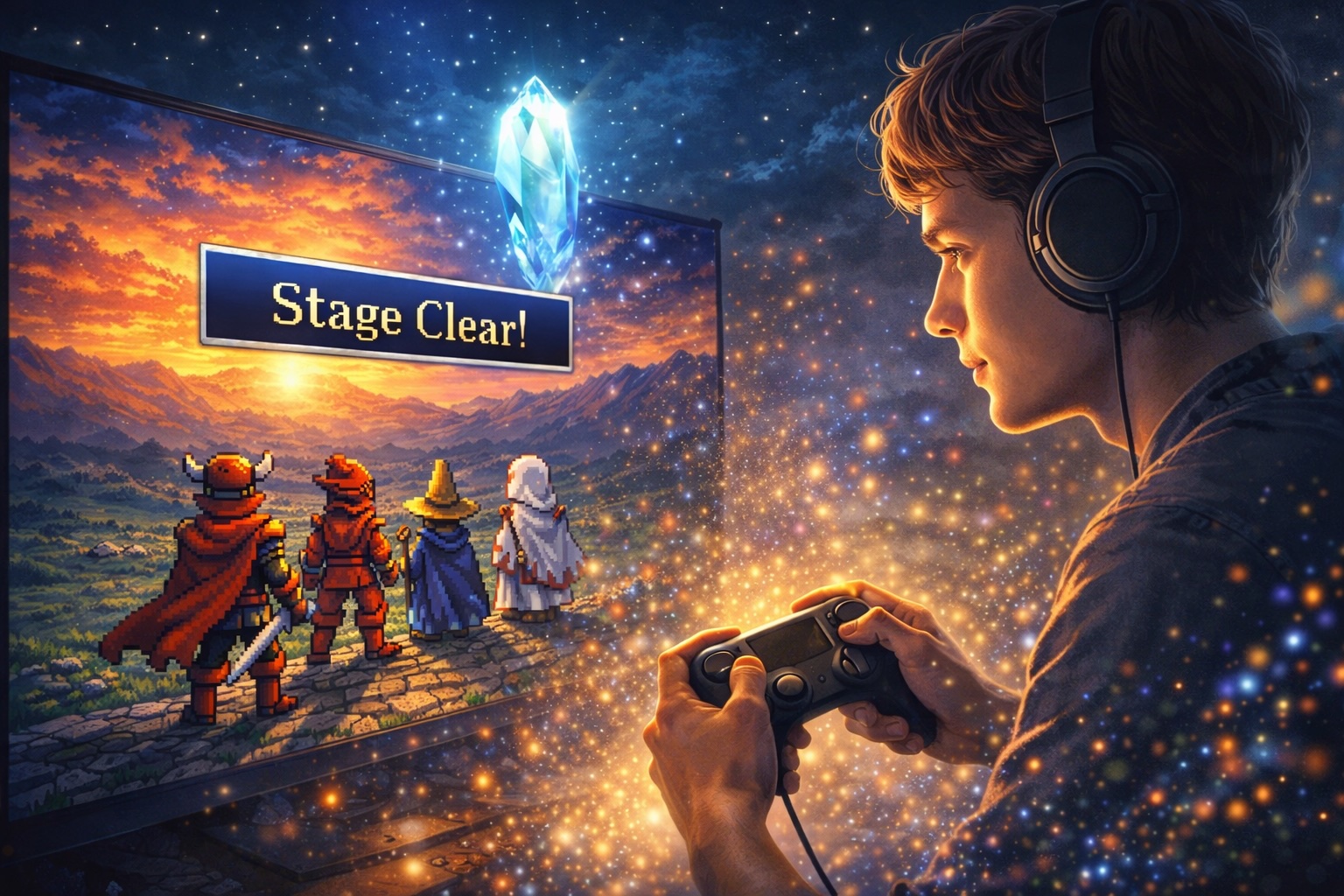
While immersed in the adventure of Final Fantasy 1, we are disconnected from daily worries and stress.
In psychology, this state is called “Flow” (Engagement).
Exploring a fantastical world of pixel art and using trial and error to decide where to go next provides high-quality rest for the brain.
Happiness is not just about “taking it easy.”
It is about being deeply immersed in something until your sense of self disappears.
Games help us reclaim this “skill of immersion” that modern people often forget.
The Role of “Warrior of Light”: Rediscovering Meaning and Purpose
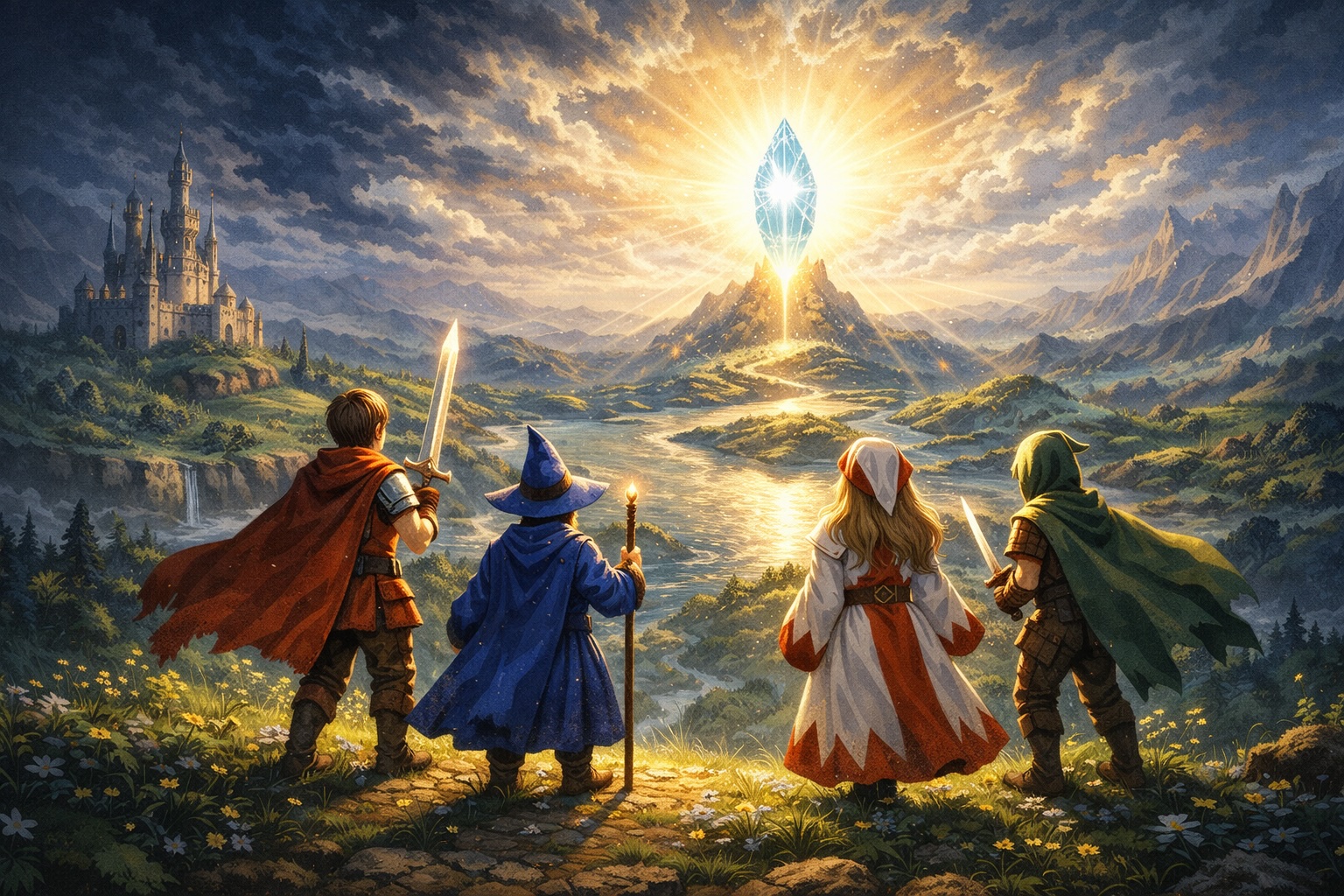
The story of Final Fantasy 1 begins with four young people setting out on a mission as “Warriors of Light.”
A key pillar of well-being is “Meaning.” This is the feeling that you are contributing to something larger than yourself.
Advancing toward the grand goal of “restoring light to the world” stimulates our fundamental desire to be useful and to live with purpose.
Even in a virtual world, the sense of moving forward step by step with a clear goal has the power to positively change your mindset in the real world.
Conclusion: Don’t Obsess “Too Much” Over Happiness
The most important thing in this adventure is not to obsess too much over “efficiency” or the “shortest route.”
The key to creating sustainable happiness lies in the mental margin to enjoy the “process itself”—including getting lost or being defeated—not just the “clearing” of the game.
The adventure of life is the same. Are you enjoying your own story, including the times when things don’t go well?
Having cleared Final Fantasy 1, what remains with me more than the emotion of the ending is the trust in myself that I “enjoyed the hardship and kept moving forward with purpose.”
Why not pick up a controller and set out on your own adventure to find the seeds of happiness?
The Door to a “Heart Adventure”
Final Fantasy 1 might be where you can experience “Competence” and “Autonomy” in their purest forms.
How will an adventure of one hour a day (or one hour a week! Lol) change your vitality for tomorrow?
Please, hold the controller and see for yourself.