













To Re-love Your “Ordinary Daily Life”: The Outlines of Life Taught by “Until I Was Arrested”
In our daily lives, we are constantly exposed to “Upward Social Comparison”—looking at those above us and feeling we must be better or more successful.
When we open SNS, someone’s brilliant life jumps into our eyes, and we unconsciously feel a lack in our own current situation.
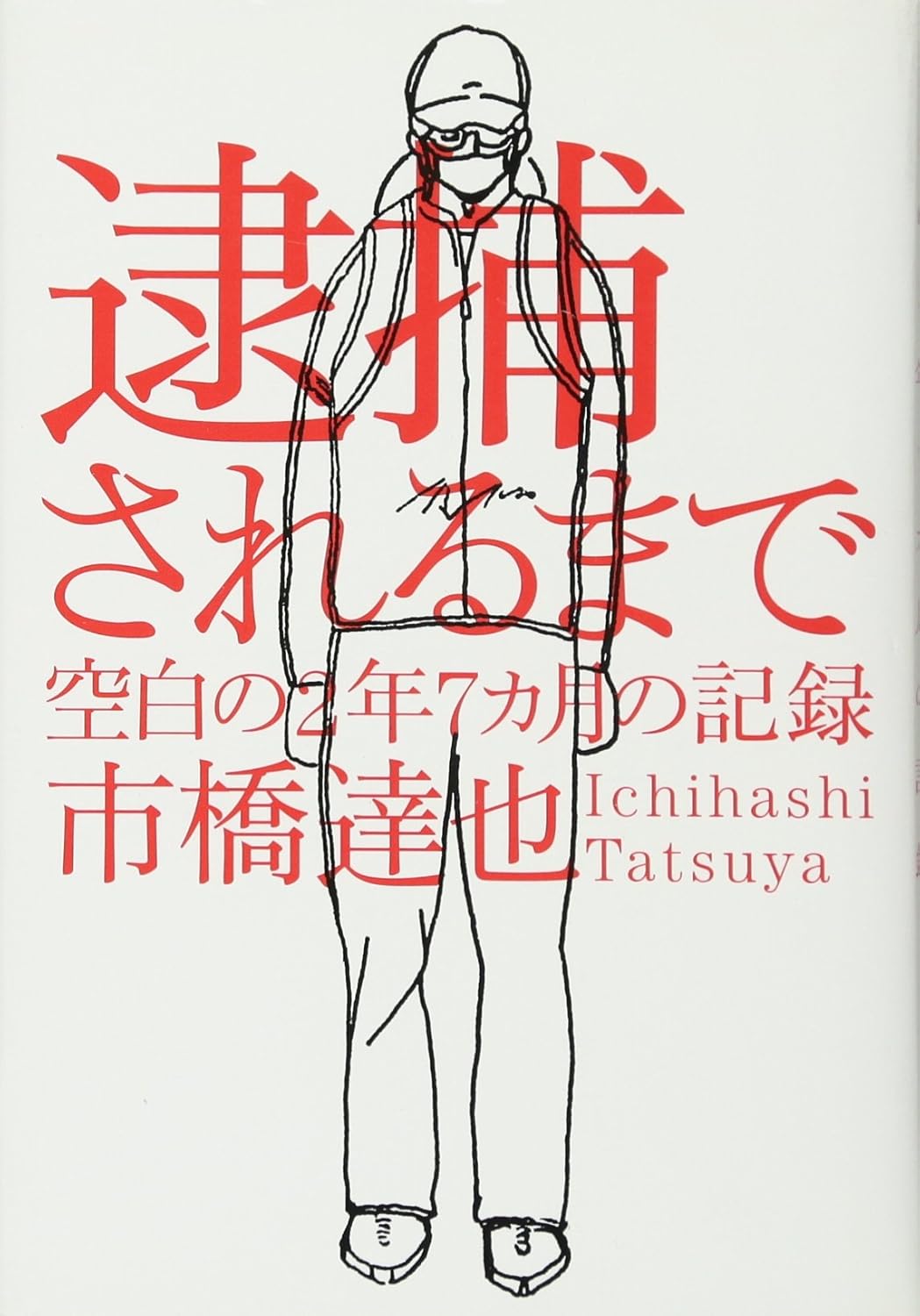
In such a modern mindset, Tatsuya Ichihashi’s memoir, Until I Was Arrested, is a book that acts as a potent medicine.
What is written in this record of a flight that shook society is not the image of a once-intellectual young man. It is simply the survival record of a man who is “miserable” and “pitiful.”
As I read this book, I felt a strange sense of shock and, ironically, a reaffirmation of my own happiness.
In this post, I will explore the psychological meaning of daring to observe this “misery” and how it leads to “Sustainable Happiness.”
Reading Experience as Wise “Downward Comparison”: The Reward Named Relief
The teaching that “comparing yourself to others is bad” may be morally correct.
However, in the context of positive psychology and social psychology, “Downward Social Comparison” (comparing yourself to those in a tougher situation) can sometimes be a powerful first aid for the heart.
The life on the run depicted in this book is, in a word, gruesome.
Sewing his own nose with thread. Cutting off his lips with scissors. Eating snakes and crabs on a deserted island. Shivering with loneliness and hunger.
Always dominated by the fear that “someone might be watching.”
The sight of a man, who was supposed to be on an elite path, crawling through the mud driven only by survival instinct is literally “rock bottom.”
Experiencing this “misery” in detail creates a strong contrast in the reader’s mind.
Using his hellish life as a mirror to illuminate your own daily life, you cannot help but feel how luxurious and undeniable it is to be able to “sleep in a warm bed,” “walk without hiding your name,” or “buy your favorite drink at a convenience store.”
This sense of relief is not mere superiority; it makes us recognize the “baseline happiness” that we usually take for granted and forget.
The foundation of Sustainable Happiness (Well-being) is built on Gratitude for these “small, everyday things” rather than big successes.
This book can be called a “Negative Textbook” that forcibly extracts that gratitude.
Reframing Misery as the “Outline of Happiness”

When we read about his gruesome life and feel attracted to that “misery,” we might become aware of “Schadenfreude” (pleasure derived from another’s misfortune) within ourselves.
However, there is no need to deny it as “having a bad personality” or to force yourself to reflect on it.
Relief as a Survival Instinct
The pleasure obtained from witnessing an overwhelming defeat is actually our “survival instinct.”
The vague anxiety that “I might fall one day too” is temporarily resolved by seeing his decisive fall, leading to the thought, “I’m still okay.”
The secretion of dopamine in the brain is a very natural biological reaction.
Turning Negative Emotions into “Energy for Happiness”
The important thing here is to use the rising emotions as a “sensor to know your current location.”
-
“I have enough of an objective perspective now to be able to read such a gruesome record.”
-
“Seeing his miserable state teaches me how well-protected my daily life is.”
By doing this, you don’t deny the emotion but reframe it as a tool to confirm your heart’s position.
Converting negative emotions into energy to strengthen your “baseline happiness” rather than ending in self-loathing—this is the practice of the mindset for creating sustainable happiness.
The Obsession with Life Taught by the Bottom of Misery
His life on the run is too pitiful and miserable.
However, from his figure trying to survive at any cost, we can paradoxically feel a kind of “Vicarious Resilience.”
Resilience is the power to recover from difficulties, but “Vicarious Resilience” refers to the phenomenon where our own vitality is activated by seeing others survive hardships.
Of course, in Ichihashi’s case, the motive was “escaping from a crime,” which has no legitimacy.
Yet, the fact that a human being clings to life so tenaciously in an extreme state has a strong impact on the reader.
“Does a person try to live even in such a miserable situation?” That obsession stimulates our question about the “meaning of life.”
Knowing the emptiness of the time he spent “unable to connect with anyone, without a name, just continuing to breathe” allows us to reaffirm how much our “connections with others” and “roles” color our lives.
His flight eventually ends with “arrest.” No matter how much he struggled, he could not escape his crime and faced social death.
Experiencing that conclusion gives us the security of “living correctly.”
The sense that “I am staying on this side (society) rather than that side (the fugitive)” will secretly reinforce our “Self-Efficacy.”
Conclusion: “Gratitude for Happiness” Left by a Negative Record
There is an ironic value in this book, written as a process for Tatsuya Ichihashi to face his crime (or as a means of self-defense).
It is that he exposed the “extreme human ugliness and weakness” that we usually turn our eyes away from.
His memoir presented us with a powerful “negative example” of what we do not want to become.
But the greater value lies in how he made us, the readers, feel at a cellular level “how precious our current peaceful lives are.”
His account was indeed “miserable.”
By putting that gruesome record into the world, I even feel a kind of “gratitude” for letting me rediscover how happy my “ordinary life” is.
Such a complex and essential feeling after reading might be what makes our “Sustainable Happiness” deeper and stronger.
Happiness is not only found in brilliant success.
Just as we understand the value of light by knowing the darkness, by knowing the “misery of rock bottom” shown by Tatsuya Ichihashi, we can finally notice the happiness blooming at our own feet.
Face the Reality on Amazon