














Breaking the Cycle of Devastation: Environment and Psychology Lessons from the “Concrete-Encased High School Girl Murder Case”
In 1989, an incident in Ayase, Adachi Ward, Tokyo, sent shockwaves throughout Japan. Reading about this non-fiction tragedy—described by prosecutors as “one of the most grave and atrocious crimes in criminal history”—is by no means a comfortable experience.
However, within this darkness lie hidden lessons that teach us where the “breakwaters” of the sustainable happiness we must protect are located. Rather than focusing on the brutality of the event, this article examines from three perspectives why this tragedy could not be stopped and what kind of environment we must provide for the next generation.
Synchronization of Life Foundations: Parental Influence and Daily Rhythm

Reading through the accounts of this case, one cannot help but feel the profound “disconnection” within the home environments of the boys who became the perpetrators.
The Consequences of Misaligned Lifestyles
In households where parents work night shifts or have daily rhythms significantly different from their children’s, there is not only a lack of supervision but also a loss of an “emotional secure base.” In positive psychology, the foundation of happiness lies in “Positive Relationships.” However, these relationships cannot exist in a vacuum. The “shared daily life”—eating at the same time and living in the same rhythm—is the very soil that nurtures a child’s sense of morality and self-control. For these boys, their parents’ absence at night may have inadvertently created a “liberated zone” where neither law nor ethics could reach.
The Significance of “Raising Together”
While being a single parent does not directly lead to delinquency, having a system where both parents are present and complement each other in watching over the child is a powerful form of risk management. If one parent misses a warning sign, the other may notice it. If one is strict, the other can provide a “safety valve” or a place of healing. This double safety net is a major factor in preventing a child from spiraling out of control.
Environmental Margin: Financial and Mental Resilience

Options Created by Economic Stability
The backdrop of this case is permeated by poor living conditions and a sense of urgency, as if the characters were constantly being chased by something. Financial stability is not merely about luxury; it is about having the “right to choose one’s environment.”
-
Moving house to physically distance a child from toxic peer groups.
-
Investing in hobbies or sports where energy can be channeled constructively.
These are only possible when there is a certain level of economic surplus.
Investment in Environmental Care
One of the elements supporting well-being is “Accomplishment.” However, in a deprived environment, a young person’s need for achievement may manifest in distorted forms, such as violence or the domination of others. Ensuring an environment where healthy challenges are possible through financial stability ultimately serves to defend the bedrock of sustainable happiness.
The Terror of the “Consistency Principle”: The Courage to Nip It in the Bud
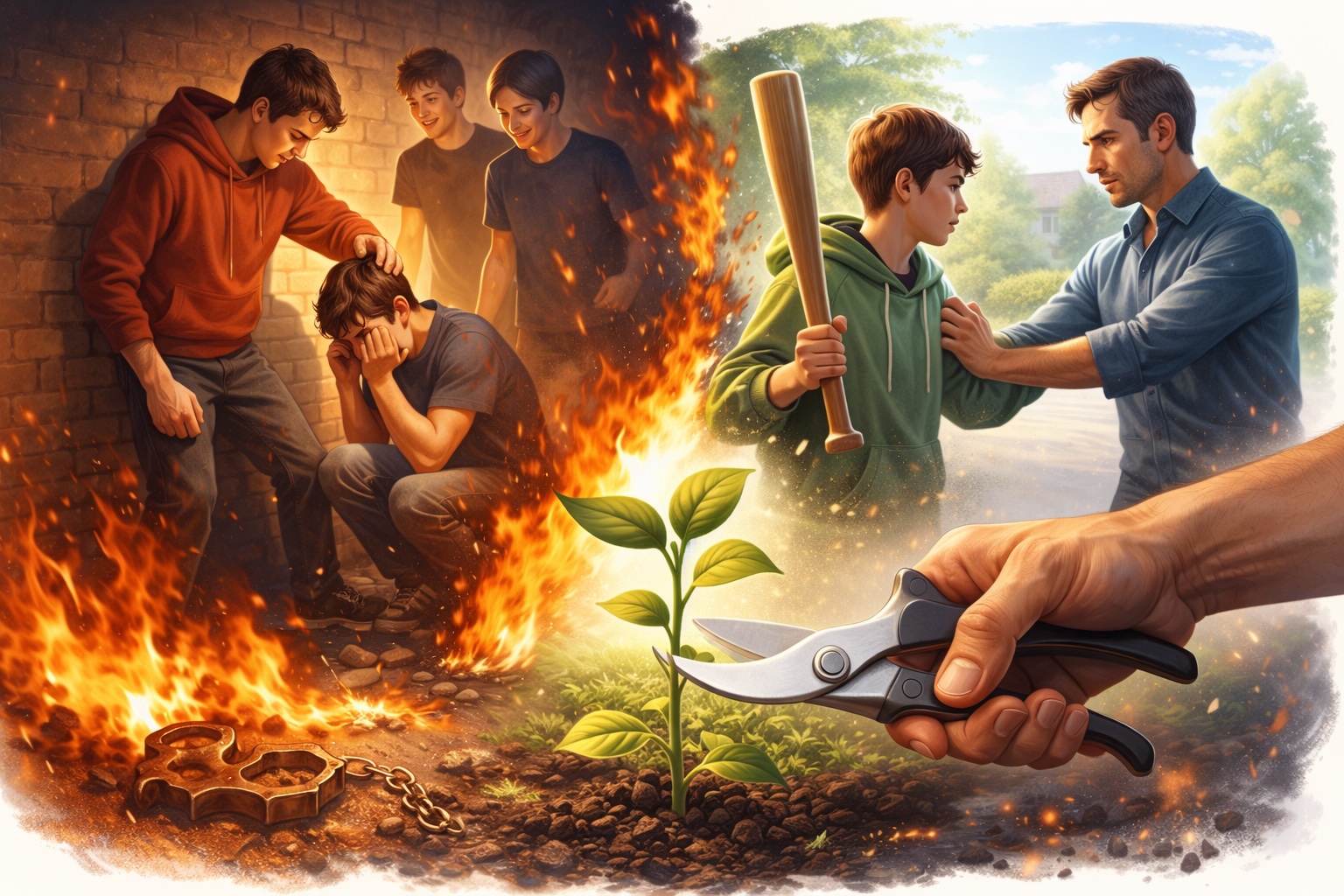
In psychology, there is a concept called the “Consistency Principle.” It refers to the human tendency to continue acting in a way that is consistent with an initial action once that direction has been set.
The Accelerator of Violence
Why did this incident proceed toward such a hopeless conclusion over such a long period? It was because the moment the initial “minor violence” or “confinement” began, a catastrophic sense of consistency took hold of the boys’ psyche: “We’ve already gone this far; there’s no turning back now.” Delinquency and bullying, once ignited, intensify at an accelerating rate. This is accompanied by the fear that stopping halfway would mean admitting one’s past faults.
The Importance of Severing the First Link
The heaviest lesson we must learn from this tragedy is the importance of “intervening at the first sign of discomfort.”
We must break the chain with a firm attitude at the stage of these seemingly common “minor signs” (such as harsher language or increased late-night outings). Once the system begins to rotate, it is nearly impossible for the parties involved to stop it through their own self-purification.
Conclusion: Protecting the “Pre-conditions” of Happiness
The “Concrete-Encased High School Girl Murder Case” leaves the reader with intense resentment and deep sadness. However, what we must learn by facing this story is that to build “sustainable happiness,” we must first understand the structures that invite “overwhelming unhappiness” and block them.
-
Synchronization of Life: Parents and children living on the same horizon.
-
Environmental Maintenance: Using economic stability as a shield to protect children.
-
Early Intervention: Breaking the negative spiral before the Consistency Principle takes hold.
These are not flashy “theories of happiness.” Yet, they represent the most basic and vital mindset for protecting a peaceful daily life. To ensure such tragedies are never repeated, we must continue to tend to the “garden” we call our environment every single day.