








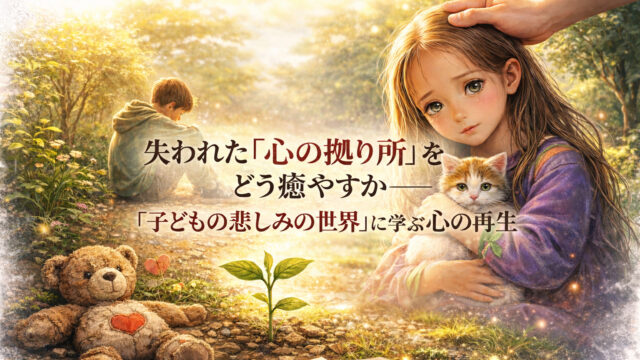

How to Heal the Lost “Anchor of the Heart”: Mindset Recovery from “The World of Children’s Grief”
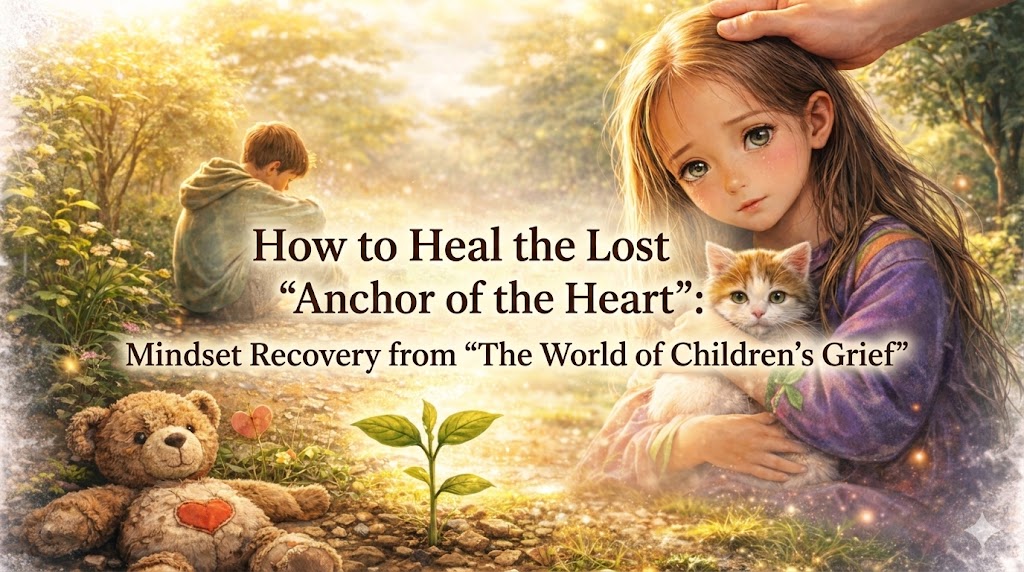
We cannot avoid the experience of “loss” in our lives.
Especially during childhood, when sensitivity is high, the “Object Loss” (losing someone or something precious) has a decisive impact on one’s future mindset.
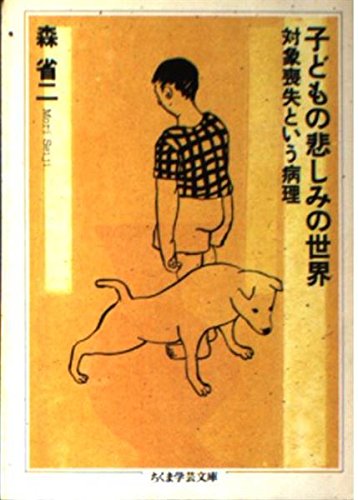
The book The World of Children’s Grief by Shoji Mori carefully unravels the “grief process” in children, which is often difficult to express outwardly.
What is “Object Loss”?: The Invisible Deficit of the Heart
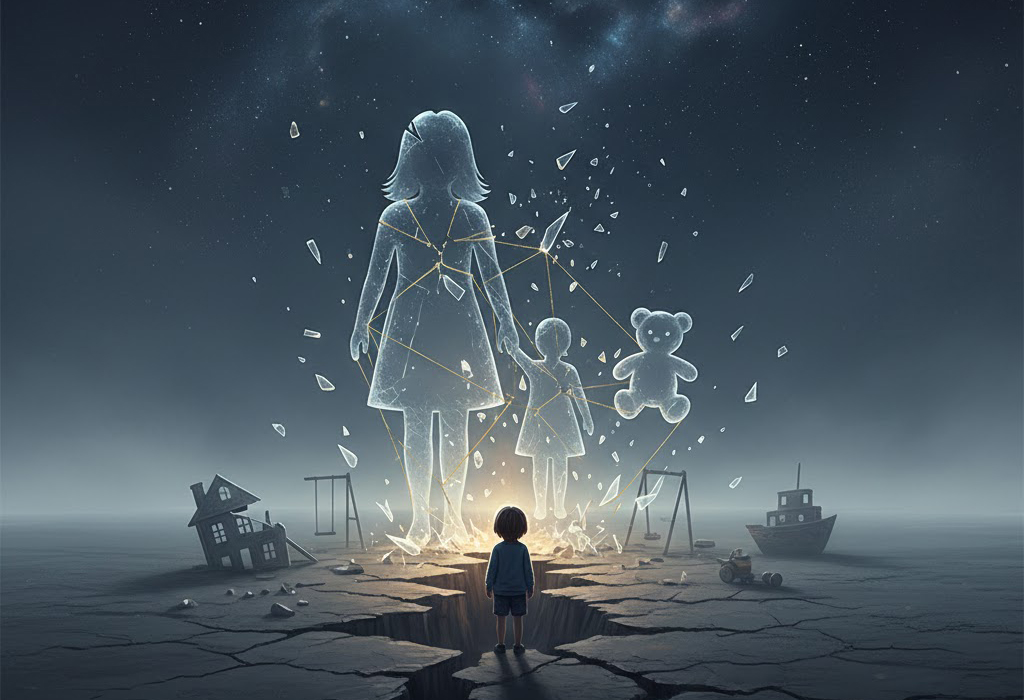
In psychology, an “object” refers not just to a thing, but to parents or attached figures who support one’s heart.
Losing this is equivalent to the collapse of the safety of the entire world for a child.
It includes not only definitive partings like bereavement but also “psychological loss” that is hard for others to see, such as “parental indifference” or “disappointment in oneself for failing to meet expectations.”
If these deficits are not properly cared for, they cast a deep shadow on “self-esteem,” the foundation of sustainable happiness.
Accurately capturing “what the child has lost and what they are grieving for” is the first step in providing support.
Defense Mechanisms of Grief: Cries Hidden in Delinquency and Lethargy
Children cannot verbalize “I am sad” as well as adults.
Therefore, the pain of loss often manifests in distorted forms.
For example, excessive rebellion, delinquency, or conversely, a lethargy that seems to suppress all emotion.
These are all types of “defense mechanisms” used to protect themselves from unbearable sadness.
Even behind extreme delinquency, “unhealed object loss” is often hidden.
Whether the adults around them can notice the “sadness behind the behavior” is the key to stopping the negative cycle.
The “Grief Work”
The process of facing the fact of loss and accepting it as a part of oneself is called “Grief Work.”
Sustainable happiness (Well-being) is not gained by simply “forgetting sadness,” but by fostering the strength to live with sadness.
-
Release of Emotions: An environment where crying, getting angry, and talking are permitted.
-
Discovery of New Objects: Building relationships or places to belong where one can newly invest their heart—not as a mere replacement for what was lost.
By carefully going through this process, a child can gain true resilience: the feeling that “even though I have lost, I can still live on.”
Conclusion: A Mindset that Turns Sadness into “Seeds of Growth”
This book does not just view the world of children’s grief as a “pathology.”
It also offers hope on how to overcome it and transform it into human depth.
Sustainable happiness is never about not getting hurt.
It dwells within the will to love oneself and connect with others after having sufficiently undergone the process of being hurt, losing, and grieving.
Those of us involved in parenting and education want to continue being a “safe haven” that quietly watches over children so they can “grieve well.”
Find Your “Safe Haven” on Amazon